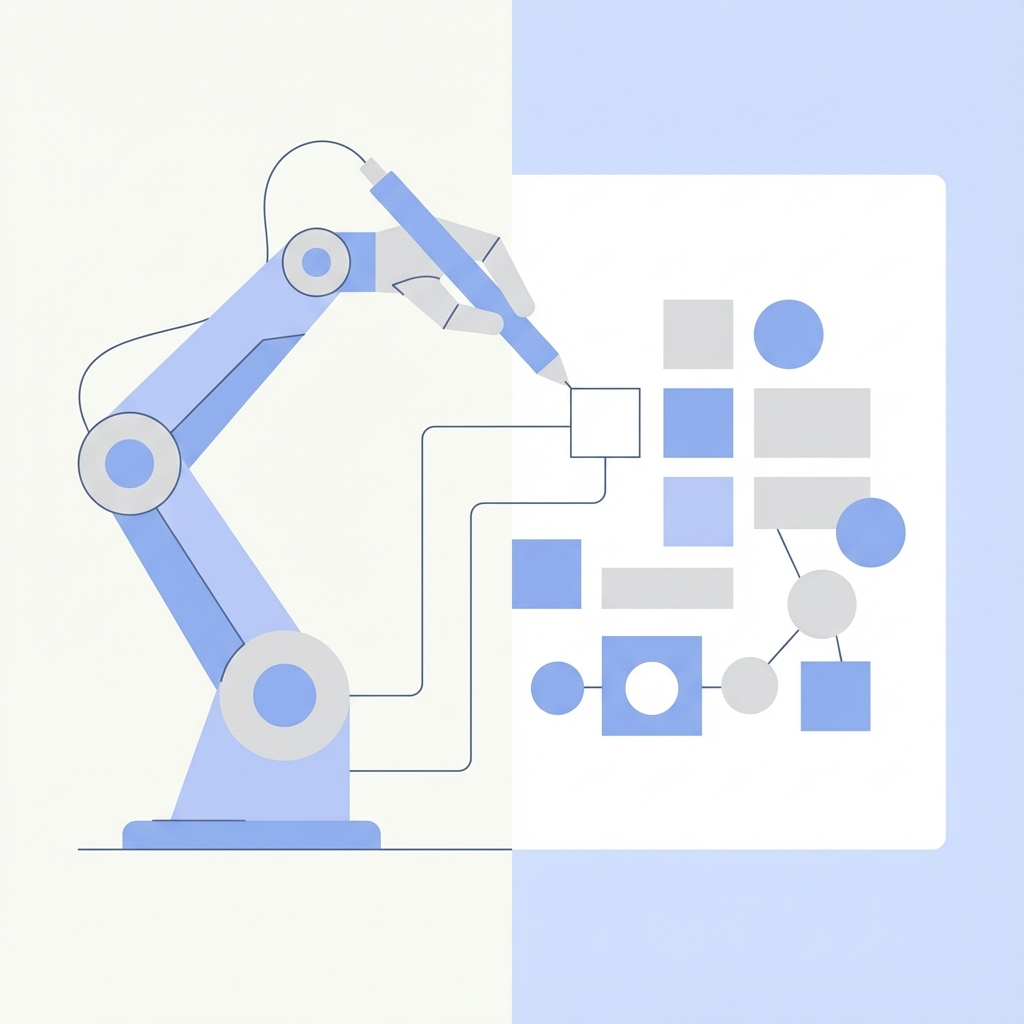
The Future of UI: AI-Generated Interfaces and Adaptive Layouts
For the last decade, UI design has been about creating static templates. We build a dashboard, and every user sees essentially the same dashboard. But with the rise of LLMs and generative AI, we are entering the era of Generative UI.
What is Generative UI?
Imagine an interface that constructs itself based on what you are trying to do right now.
- Scenario: You ask a travel app to "Plan a trip to Tokyo."
- Current UI: Shows a list of flights and hotels in a standard grid.
- Generative UI: might generate a tailored map view, a timeline itinerary, and a budget widget instantaneously because it recognizes intent.
The UI components (The Atoms and Molecules) are pre-designed, but the layout (The Template) is compiled on the fly by AI.
Adaptive Layouts
We already have responsive design (adapting to screen size). The next step is Context-Aware Design.
- Context: The user is walking (detected via mobile sensors).
- Adaptation: The buttons become larger (Fitts's Law), text becomes high contrast, and non-essential inputs are hidden.
The Vercel AI SDK
Tools like Vercel's AI SDK are already pioneering this with "Streamed UI." The AI doesn't just return text; it streams React components.
// The AI decides to render a FlightCard component
{ component: 'FlightCard', props: { price: '$400', time: '10am' } }
Challenges
- Consistency: How do we maintain brand identity if the AI is building the UI? Design Systems will become more important as the rigid constraints the AI must follow.
- Trust: Users build muscle memory. If the UI changes every time, it becomes confusing. Generative UI must be predictable in its unpredictability.
Conclusion
The role of the UI Designer is shifting from "painting screens" to "defining constraints." We are moving from architects of buildings to gardeners of ecosystems.